

When Jesus calls himself the “Bread of Life”, he means that he is spiritually essential for survival and eternal life, acting as the only source that can permanently satisfy human spiritual hunger.
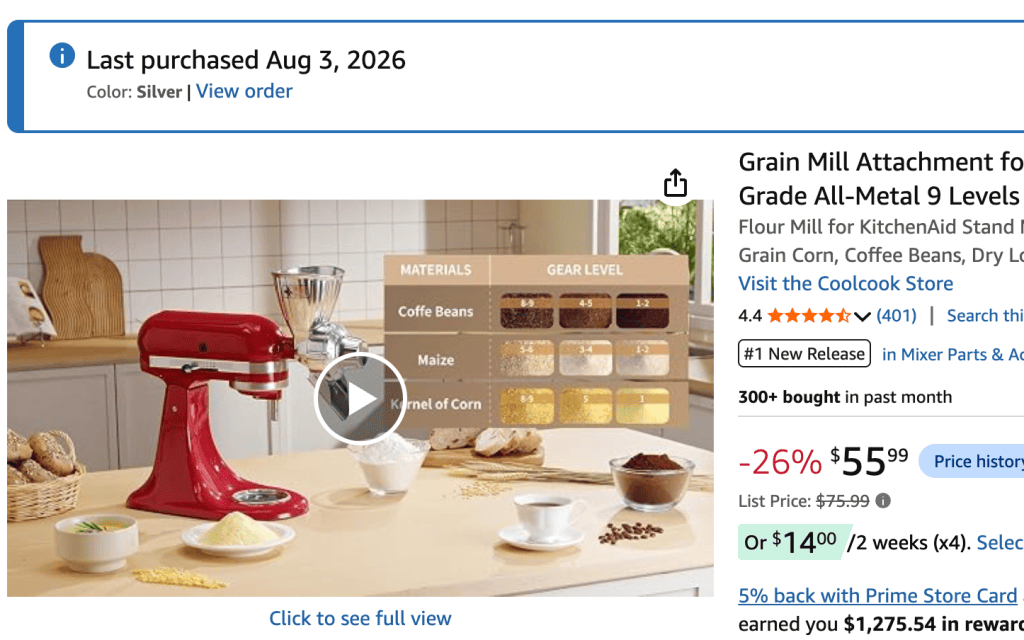
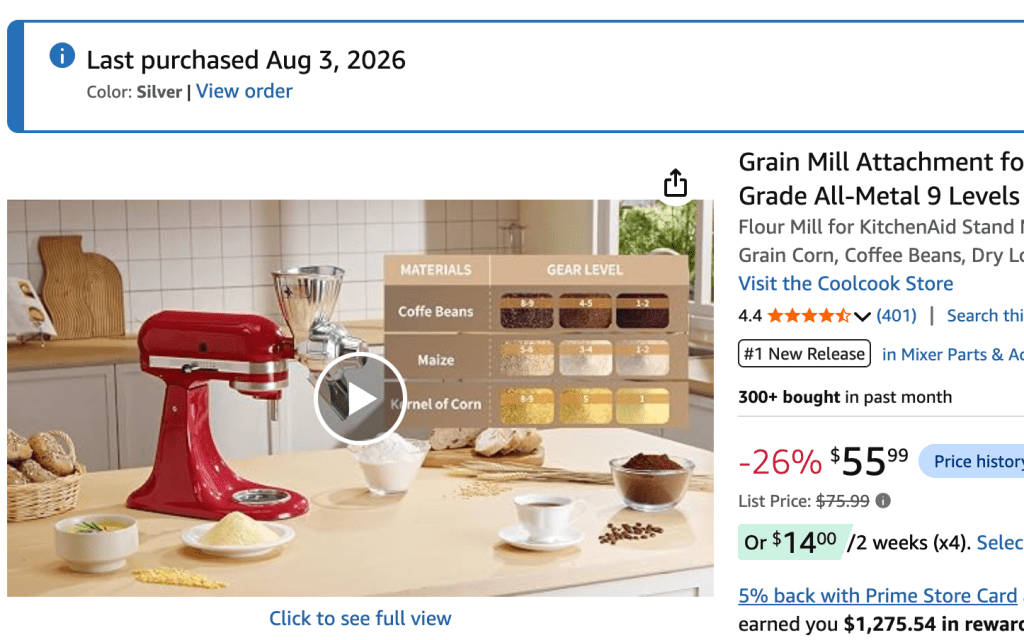
This is why my family has decided to embrace the teaching of our Lord and start milling our own Wheat Berries at home. I already own a KitchenAid Mixer, so my plan to save our family some money really worked out with this Amazon Purchase. The attachment needed minimal set up and after washing it, letting it dry completely, and getting it attached to my machine, the result was amazing.
I passed my organic wheat berries through the hopper a couple of times before my flour was at the desired flour consistency and when I had all the other ingredients ready in my bread maker, the flour was done, no babysitting, no headache. Just awesome fluffy delicious and nutritious bread…exactly how God designed it to be.
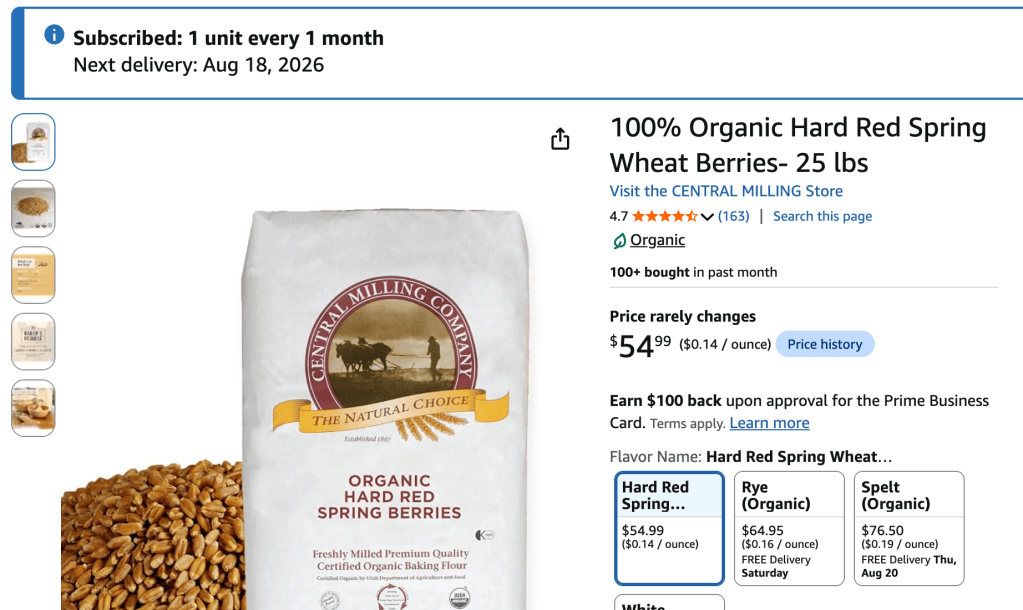
I have subscribed to have a 25lb bag of wheat berries shipped to my house once a month and so far, SO delicious!
What does this Jesus being the “Bread of Life” Mean According to Prominent Biblical Sources?
According to theological insights from GotQuestions.org, Jesus’ statement carries three primary meanings:
- Essential for Spiritual Life: Just as bread is a daily food staple required to maintain physical health, Jesus is necessary for eternal survival.
- A Claim to Deity: By using the phrase “I AM,” Jesus consciously invoked the covenant name of God, which biblical listeners recognized as a direct claim to being divine.
- An Invitation to Faith: The call to “come” and “believe” highlights that salvation comes from choosing to place active personal trust in Him rather than relying on temporary physical signs.
Ken Ham Perspective:
According to author and speaker Ken Ham on his Answers in Genesis Blog, this title addresses a deep cultural need:
- The Only Remedy for Modern Hunger: Ham explains that contemporary society is searching desperately for meaning, and Jesus is the only “living water and bread of life” capable of satisfying that spiritual void.
- Caring for Body and Spirit: Ham adds on his Ken Ham Facebook Page that while Jesus emphasizes a heavenly mystery, physical hunger still matters to God. He teaches that believers should nurture their bodies both physically and spiritually to glorify the Creator.
Relating the Metaphor to Actual Bread
In the ancient Near East, bread was not an optional side dish; it was the ultimate staple food that kept people alive from day to day.
- The Manna Connection: The crowds following Jesus were looking for miraculous physical food, similar to the physical manna their ancestors ate in the desert. Jesus contrasted himself with actual bread by explaining that physical bread only solves hunger temporarily, whereas he satisfies the soul permanently.
- The Broken Loaf: Actual bread requires grains to be crushed, kneaded, and subjected to fire to become useful food. Christians tie this reality to Jesus’ sacrifice, where his own body was “broken” to offer life to the world.
Nutritional Value According to the Bible
The Bible frequently honors bread as the “staff of life” because it supports and upholds physical strength. The most detailed nutritional breakdown found in scripture appears in the Old Testament book of Ezekiel 4:9, where God outlines a highly specific formula combining several plant ingredients:
- Grains: Wheat, barley, millet, and spelt.
- Legumes: Beans and lentils.
When these distinct grains and legumes are combined and allowed to sprout, they undergo a natural biochemical change that turns a simple loaf into a complete plant-based protein source.
Matthew 12:1 (Eating raw grain): “At that time Jesus went through the grainfields on the Sabbath. His disciples were hungry, and they began to pick heads of wheat and eat them.”
Ezekiel 4:9 (Using wheat for survival bread): “And you, take wheat and barley, beans and lentils, millet and emmer, and put them into a single vessel and make your bread from them…”
Psalm 81:16 (Wheat as a blessing): “But I would feed you with the finest of the wheat, and with honey from the rock I would satisfy you.”
Deuteronomy 8:8 (The Promised Land): A description of Canaan as “a land of wheat and barley, of vines and fig trees and pomegranates..
Historical Context of Eating Raw Grain
- The Law: Under Mosaic law (Deuteronomy 23:25), travelers were allowed to pluck raw grain with their hands to satisfy immediate hunger in a neighbor’s field, though using a sickle was prohibited.
- The Conflict: The religious leaders (Pharisees) objected in Matthew 12 not because eating the wheat was theft, but because doing it on the Sabbath looked like harvesting and threshing work
Nutritional Value According to Top Health Sources
Medical and nutritional authorities, such as the Cleveland Clinic, confirm that breads inspired by this biblical formula offer superior health benefits compared to modern processed white bread:
- Complete Protein: Sprouting and blending these specific grains creates a product containing all nine essential amino acids, yielding roughly 4 to 5 grams of protein per slice.
- High Dietary Fiber: Providing about 3 grams of fiber per serving, it aids digestion, improves gut health, and keeps blood sugar levels steady.
- Increased Bioavailability: Health experts note that sprouted grain bread contains far less phytic acid (an anti-nutrient that locks up minerals). This allows the human digestive tract to easily absorb vital micronutrients.
- Essential Minerals & Vitamins: This type of bread serves as an excellent natural source of:
- Iron & Zinc: Vital for oxygen transport in blood and strong immune systems.
- Magnesium & Potassium: Essential for healthy nerve signaling and muscle function.
- B-Vitamins: Crucial for cellular metabolism and sustaining steady daily energy.
- Bread made from organic red wheat berries that are milled at home and used immediately provides the absolute highest nutritional value possible from a wheat-based bread. By milling and baking right away, you bypass the massive commercial processing and air exposure (oxidation) that destroys nutrients in store-bought flour.
The Core Nutritional Breakdown
When you mill the whole berry at home, you retain 100% of the three parts of the grain: the fiber-rich outer bran, the nutrient-dense inner germ, and the starchy endosperm.
Nutrient Category
What Freshly Milled Red Wheat Bread Retains
Proteins & Gluten
High Protein (12% to 15%). Hard red wheat has a robust gluten structure, making it fantastic for a structured, elastic bread rise.
Vitamins
Rich in Vitamin E and B-complex (Thiamin B1, Niacin B3, B6, Folate B9). These act as metabolic spark plugs and support cellular health.
Minerals
Dense in Essential Minerals. High natural levels of Magnesium, Iron, Zinc, Selenium, Potassium, and Manganese.
Dietary Fiber
Maximum Fiber Intact. One standard serving contains roughly 4g to 6g of natural fiber, which aids digestion.
Why “Milled at Home and Used Immediately” Changes Everything - Zero Oxidation Loss: Commercially milled flour sits in bags for weeks or months. Within roughly 3 days of grinding, exposure to air (oxygen) begins degrading fragile nutrients—especially heat-sensitive Vitamin E and essential fatty acids. Using it immediately locks these in.
No Stripping of Grains: Standard grocery store white flour completely removes the bran and the germ to extend shelf life, throwing away up to 70% of the grain’s natural minerals and vitamins. Even commercial “whole wheat” flour is often stripped down and recombined later. Home milling keeps the entire powerhouse unified.
Lower Glycemic Impact: Because the natural fiber structure is undamaged and fully present, home-milled bread is digested much more slowly. It maintains a much lower glycemic index (GI) than white or highly processed breads, avoiding sharp blood sugar spikes.
Chemical-Free: Organic red wheat berries ensure your bread is free from synthetic chemical bleaching agents, preservatives, and glyphosates.
Pro-Tip for Maximum Mineral Absorption
Whole grains naturally contain phytic acid, which can bind to minerals like iron and zinc and reduce how much your body absorbs. To maximize the nutritional output of your freshly milled flour, use a long fermentation process (like sourdough). The wild yeasts and lactic acid bacteria break down the phytic acid, making the dense mineral profile of your home-ground red wheat fully bioavailable to your body. - https://www.amazon.com/shop/influencer-175d9ba7/photo/amzn1.shoppablemedia.v1.73ccebc1-1983-4d65-8200-a9df0ca09d61?tag=onamzleeswank-20&ref_=aip_sf_photo_spv_ons_mixed_d&ccs_id=ec7c89d6-2d8e-4205-81f6-de5a9a5d7c93
- https://www.amazon.com/shop/influencer-175d9ba7/photo/amzn1.shoppablemedia.v1.307bb252-ba01-4e25-a9b5-fb6cbb797552?tag=onamzleeswank-20&ref_=aip_sf_photo_spv_ons_mixed_d&ccs_id=868e5e30-7a8f-4737-ab62-540c152e69b9


You must be logged in to post a comment.